Quick answer
How can I update my website without a developer in India?
You can update without a developer by learning your site’s CMS, hiring a freelancer or agency for tickets, paying for a maintenance retainer, or using a reviewed message-based workflow like SitePilot — send a Telegram message, someone reviews the change, then it goes live. The right choice depends on how often you change content and how much technical work you want to own.
- Typical wait for a small fix
- Days
- Price, photo, or copy changes stuck in WhatsApp threads
- How Indian owners work
- Phone-first
- Most updates start as a message, not a CMS login
- Safe publish pattern
- Review first
- Human check before anything goes live
- SitePilot start
- Free check
- Compatibility review before any monthly plan
Your festival offer is ready. The new product photo is on your phone. The phone number on the contact page is wrong. None of that should require a sprint ticket — yet for many Indian small businesses, every website update still waits on “the developer.”
This guide covers practical ways to update your website without a developer: what each option is good for, where it breaks, and how to choose. SitePilot is one path — not the only one.
Key takeaways
- “Without a developer” means you are not writing code — someone (or a tool) still publishes carefully
- DIY CMS works if you will log in and learn; most owners abandon it after launch
- Freelancer WhatsApp tickets are flexible but slow and inconsistent
- Agency retainers buy reliability when you have steady monthly change volume
- Message-based updates (Telegram → review → live) fit phone-first Indian SMBs for routine content
Why Indian businesses get stuck waiting on developers#
The website went live. Training happened once. Then real life took over — shop, staff, GST, deliveries. The CMS password sits in a notebook. The freelancer who built the site is on another project. So updates become messages:
- “Bhai, change the price on the pricing page to ₹4,999.”
- “Add this WhatsApp number on the footer.”
- “Upload these three photos to the gallery.”
Those requests are simple. The bottleneck is coordination: queueing, clarifying, deploying, and confirming. That is why small business website maintenance in India often feels slower than it should — not because the change is hard, but because the path from phone to publish is broken.
What “updating without a developer” actually means#
It does not mean zero people and zero process. It means you do not write code for routine changes: copy, images, prices, FAQs, service blurbs, blog posts, and similar content.
It also does not mean every wish is safe to publish instantly. A wrong phone number or broken layout can cost leads. The healthy pattern is: request → prepare → review → publish. Who prepares and who reviews changes by option.
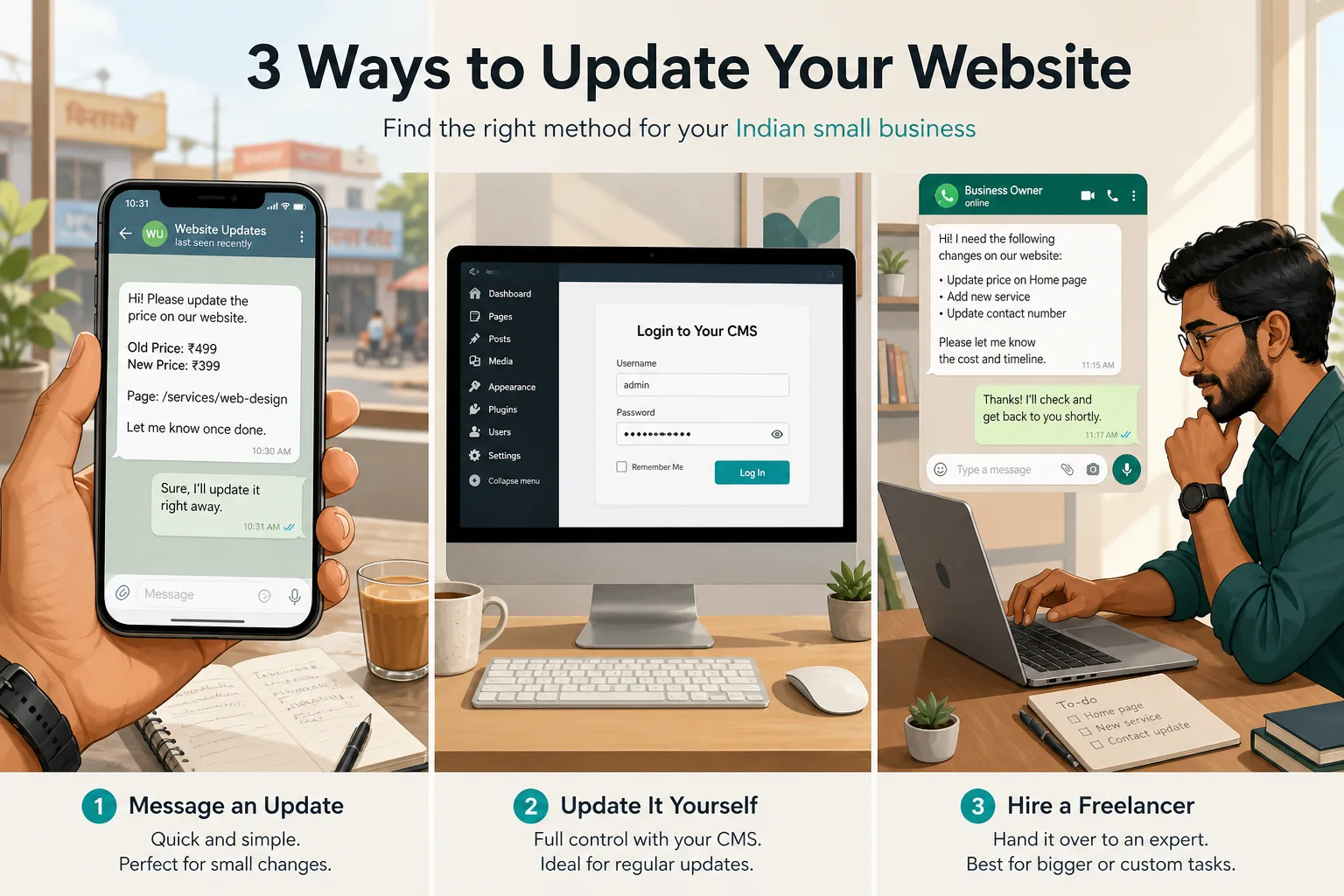
Option 1 — Learn a CMS yourself#
If your site was built with a CMS (WordPress, a headless admin, Shopify, etc.), you can log in and edit pages yourself. Many website design handovers include training for exactly this.
Works well when: you (or someone on your team) will actually open the admin regularly, and your templates are simple.
Breaks when: login friction wins, plugins confuse you, or “one small layout tweak” turns into breaking the homepage. DIY is free on paper and expensive in time.
Option 2 — Freelancer / WhatsApp tickets#
You message a freelancer or the original developer. They update when free. Common for Indian SMBs because it matches how you already work — on the phone.
- Pros: flexible, no monthly commitment, familiar channel
- Cons: unpredictable turnaround, context lost in chats, no shared review trail
- Risk: the person goes offline during festival season — exactly when you need updates
Option 3 — Full agency maintenance retainer#
A monthly plan with an agency covers updates, backups, monitoring, and small improvements. You get a named process and SLAs instead of hoping someone sees your WhatsApp.
Best when: you have steady monthly change volume, care about uptime, and want one team accountable. Overkill when: you only need a price change twice a month and do not want a heavy retainer.
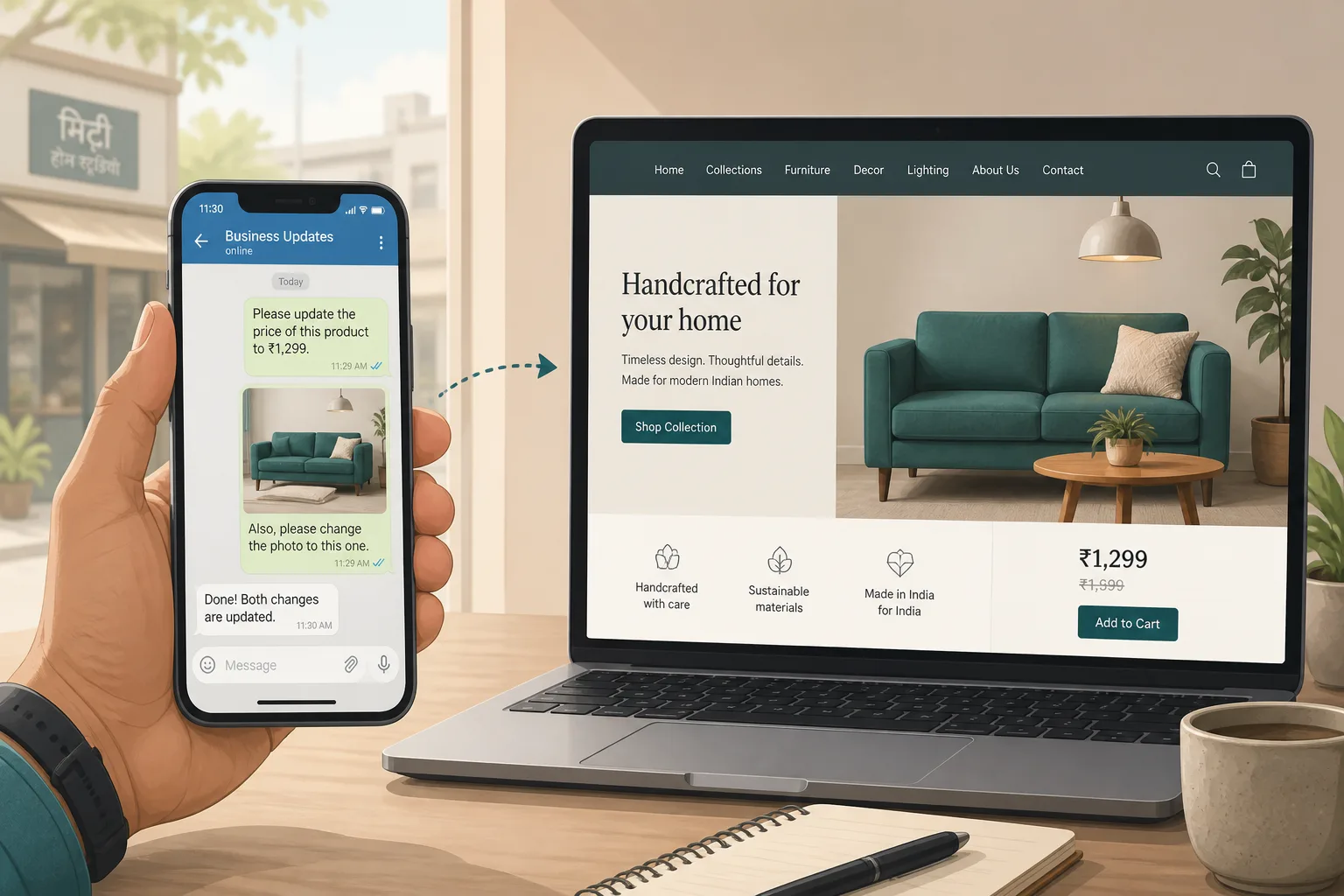
Option 4 — Message-based updates (Telegram → review → live)#
This is built for owners who want to manage their website from their phone without learning a CMS. You send a clear Telegram message. The update is prepared, reviewed before publish, then goes live. Your site keeps an organised history (for SitePilot, changes are tracked in GitHub).
Aucio SitePilot AI is our version of that workflow for compatible sites: Telegram in, human review, then publish. It is aimed at routine website maintenance — not building new product features.
- No website login for day-to-day content changes
- No coding knowledge required
- Every change reviewed before it goes live
- Flat monthly plan after a free compatibility check (price confirmed after review — not a one-size public number)
How to choose the right approach for your site#
| Factor | DIY CMS | Freelancer tickets | Agency retainer | SitePilot (Telegram) |
|---|---|---|---|---|
| Speed for small edits | Fast if you know the admin | Hours to days | SLA-dependent | Message → review → live |
| Skill you need | CMS comfort | Clear briefs | None technical | Send a clear message |
| Control & safety | You publish (easy to break) | Depends on person | Process + team review | Reviewed before publish |
| Cost shape | Your time | Per task / ad hoc | Monthly retainer | Flat monthly after check |
| Best fit | Hands-on marketers | Rare one-off edits | Steady volume + uptime | Phone-first routine updates |
If you already love your CMS, keep it. If you only need a redesign or a new feature, book a build — don’t force a maintenance tool to do project work. If your bottleneck is “I texted three days ago and nothing moved,” a reviewed Telegram workflow is worth testing.
See if SitePilot fits your website
Share your URL for a free compatibility check. We’ll tell you what routine updates we can take via Telegram — and what still needs a project.
Update by Telegram with SitePilotGetting started checklist#
- List the last 10 website changes you needed (prices, photos, copy, pages).
- Mark which ones were routine content vs real development.
- Note how you requested them (WhatsApp, email, CMS) and how long each took.
- Decide: DIY more, hire tickets, retainer, or message-based updates.
- If message-based: start with a compatibility check on your live URL before paying for any plan.
- Write one sample Telegram-style request so the workflow is clear before you commit.
FAQ#
Can I really update my website without depending on one developer?
Does SitePilot work with any website?
Do I need coding knowledge to use Telegram updates?
Why Telegram for Indian businesses?
What will SitePilot not do?
How do I get started with SitePilot?
The bottom line#
Updating a website without a developer is a process choice, not a magic button. DIY CMS, freelancers, retainers, and Telegram-based reviews all work — for different rhythms.
If you are an Indian small business owner who already runs the company from your phone, and your pain is days of waiting for routine changes, start with a free compatibility check for SitePilot. If you need a new site or a redesign instead, talk to us about a website build or contact the team.
Update by Telegram with SitePilot
Free compatibility check for Indian small businesses. Every update is reviewed before it goes live — plan price confirmed after review.
Update by Telegram with SitePilot